It’s getting to the time of year where the weather shifts and people start to get colds and sniffles. Even though it’s still a bit early in the season, starting some herbal infusions now will have remedies and immune supporting medicines ready by the time flu season really comes around. I personally love buying or foraging for herbs and making various creations out of them. Here are some simple herbal preventatives and medicines I tend to make for autumn!
Fire Cider
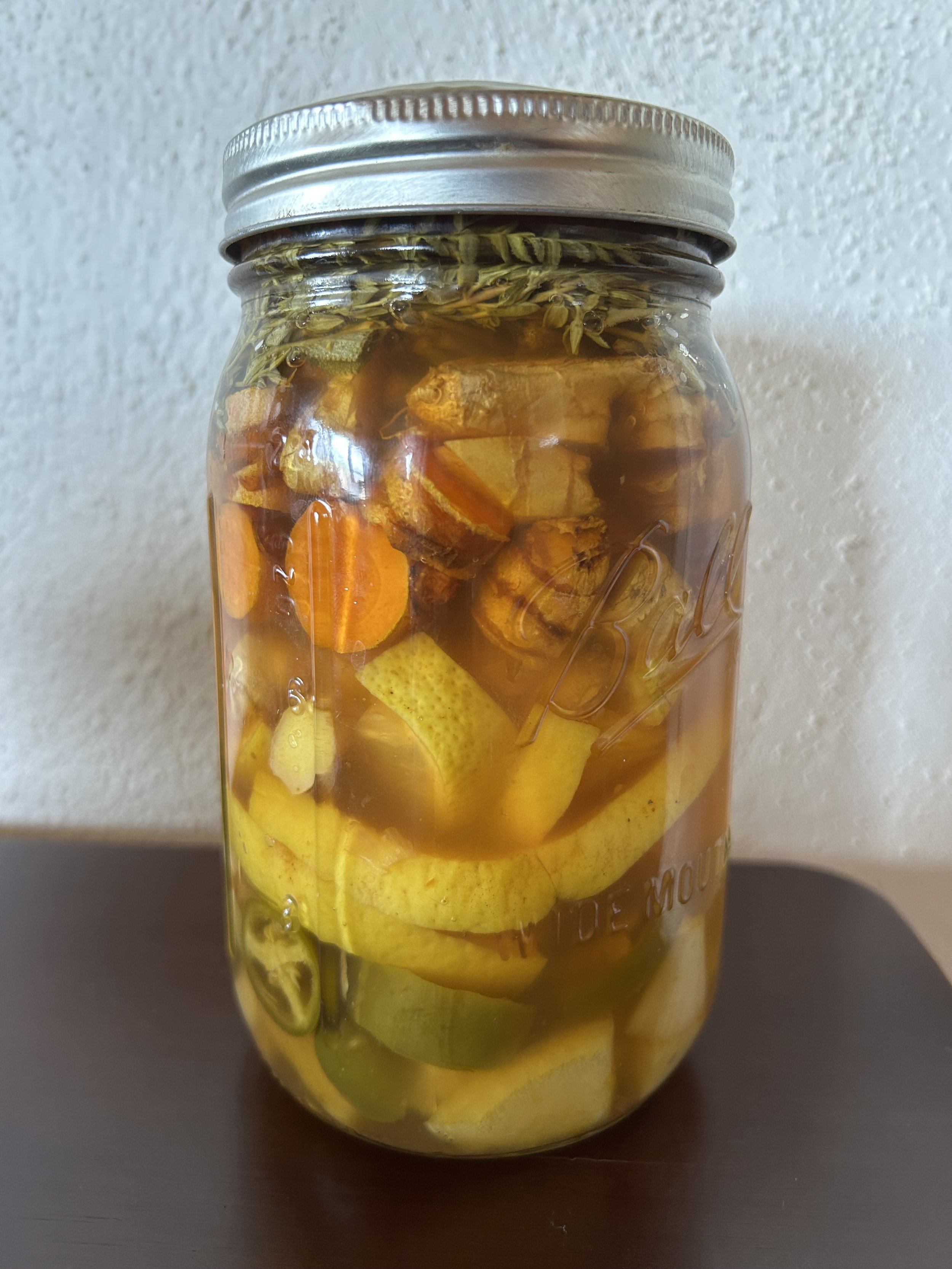
This year’s infusion!
Fire cider is a traditional herbal tonic that uses pungent herbs and apple cider vinegar. Even though there aren’t a lot of studies on it’s efficacy for colds, it has bunch of pungent herbs, spices and fruits that are known for their abilities to support the immune system, it’s fun to make and feels healthy and warming to the digestive system.
There are so many different variations on recipes for fire cider - instead of giving you a specific one, I’d like to put a list of ingredients that are typically in them, so you can mix and match depending on your flavor preferences.
Core ingredients
Apple cider vinegar (preferably raw, unfiltered, with the "mother")
Horseradish root, freshly grated
Ginger root, sliced or grated
Garlic cloves, crushed
Onion, chopped
Hot peppers (such as jalapeños, cayenne, or habaneros), sliced
Common additions
Turmeric root (fresh or dried)
Black peppercorns (helps enhance turmeric absorption)
Lemon, sliced (including peel if organic)
Orange, sliced
Rosemary
Thyme
Sage
Cinnamon sticks
Fresh or dried oregano
Sweetener
Raw honey, stirred in after straining the vinegar infusion (optional, to taste)
Basic preparation
Chop all the fresh ingredients.
Fill a clean glass jar about ⅔–¾ full with the solids.
Cover completely with apple cider vinegar, leaving about 1 inch (2.5 cm) of headspace.
Seal the jar (place parchment paper under a metal lid to protect it from the vinegar if needed).
Let it infuse for 4–6 weeks, shaking the jar every day or two.
Strain out the solids.
Stir in honey to taste, if desired.
Store the finished fire cider in the refrigerator or a cool, dark place. It can keep for many months because of the vinegar.
People often take 1–2 tablespoons daily or dilute it in warm water as a beverage.
Oxymel
Oxymels are another traditional herbal remedy, but instead of gently sweetening a fire cider with a little honey, the ratio would be closer to 1 part apple cider vinegar to 1 part honey. I would take any of the ingredients above from the fire cider, infuse them in the vinegar, and if you’d like to make it an Oxymel, just mix that ACV with an equal amount of honey once it’s done infusing, and viola! Another variation on an herbal tonic.
Usnea Tincture
Usnea (also known as Old Man’s Beard) is pretty abundant in the mountains near Taos and Red River, so I tend to forage for it in the fall. The higher up the mountain you go, the more you’ll find this light green lichen hanging off the tree branches. It’s not recommended to forage for plants if you don’t know what you’re looking for, but it’s also easy enough to find at any herbal store.
Usnea contains usnic acid, which is known to have anti-inflammatory, anti-microbial, and potentially anti-viral properties, although it should be taken with care, as there have been some instances of liver toxicity or allergy in certain forms of usnic acid. It’s been known to help internally with strep, pneumonia, and other respiratory infections, as well as topically for Athlete’s foot and vaginal infections.
While I’m sure there are other ways to extract herbs that may be more potent, I typically just dry the herb in my dehydrator (it will already be dried if you bought it from the store), and then grind it down into a powder. After that, you can gently heat any ethyl alcohol (50-60%) until it’s hot but not boiling, and pour it over the herbs. I store it in a glass jar for 4-6 weeks and then strain it out. Suggested dosage for immune stimulation would be 30 to 60 drops up to four times a day. For acute bacterial infections; 1 teaspoon (5ml) up to six times per day.

By Jason Hollinger - Usnea cavernosa, CC BY 2.0, https://commons.wikimedia.org/w/index.php?curid=50601634